Use cases · Researchers · Data sharing story
Sharing the Brain Genomics Superstruct Project
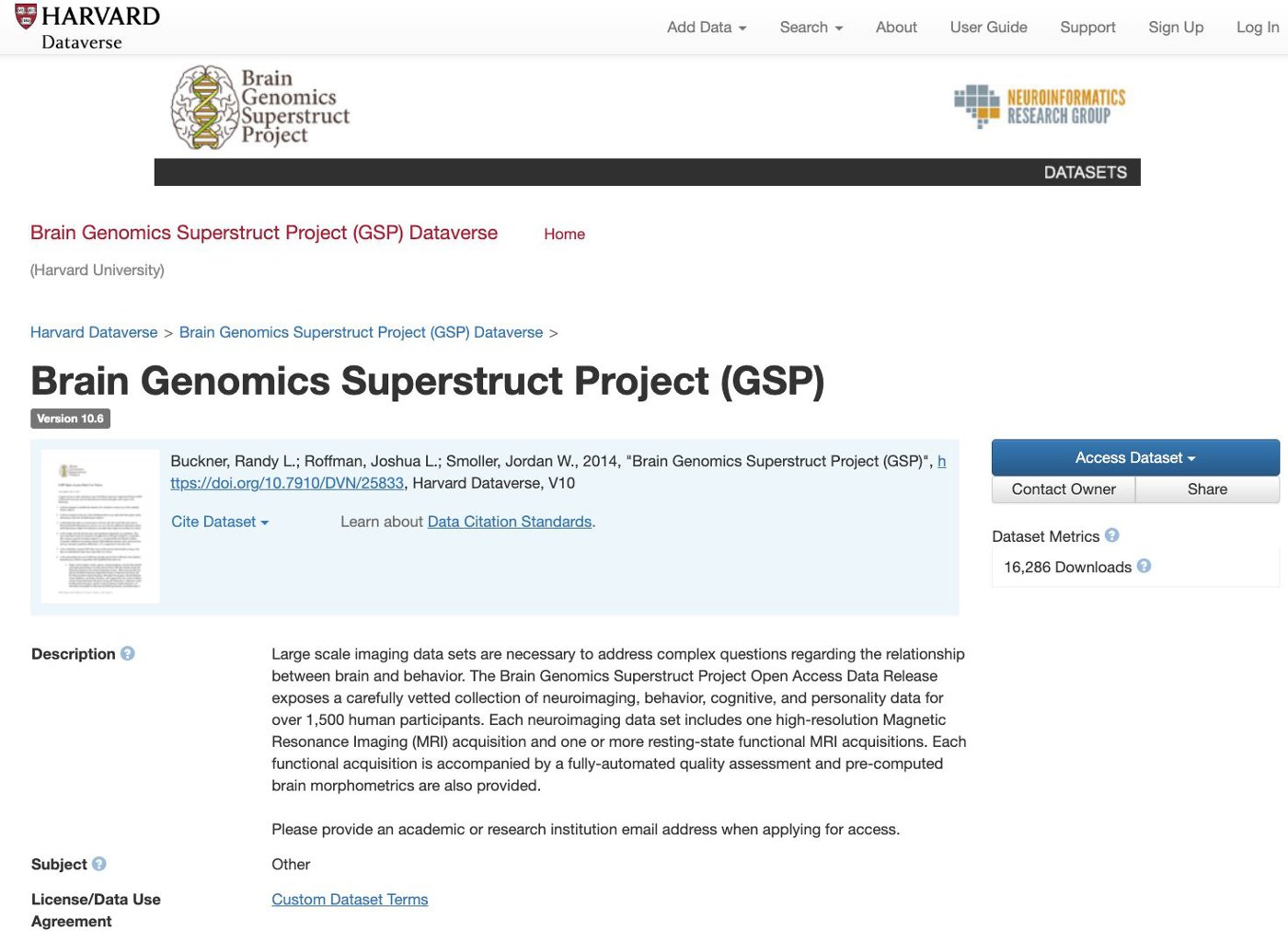


Harvard Dataverse Repository Data Sharing Use Case: Brain Genomics Superstruct Project (GSP)
GREI data sharing story — Published 2026-02-04
"I've been an open science advocate since I began my career. We built the data-sharing platform called XNAT, the Extensible Neuroimaging Archive Toolkit. We have always sought to share our data because it broadens scientific opportunity and ensures transparency. The data here was part of one such open data collaboration across 20 investigators in the Boston area who were collecting human neuroimaging data. We added a uniform data set of imaging and behavior data, aggregated it, and made it open to the community."
— Randy L. Buckner
Project Overview
Researcher(s) or Team: Buckner, Randy L. (Harvard, MGH, HMS); Roffman, Joshua L. (MGH, HMS); Smoller, Jordan W. (MGH, HMS)
Dataset(s) shared: https://doi.org/10.7910/DVN/25833
Related publication(s) and data:
Funding: Supported by Shared Instrumentation Grants 1S10RR023043 and 1S10RR023401, the Simons Foundation (SFARI) and the Howard Hughes Medical Institute (Randy L. Buckner), and National Institute of Mental Health grants R01-MH079799 and K24-MH094614 (Jordan W. Smoller) and K01-MH099232 (Alexandre J. Holmes). Additional support was provided by the MGH–USC Human Connectome Project (U54-MH091665).
The Team
 |  |  |
|---|---|---|
| Dr. Randy L. Buckner Sosland Family Professor of Psychology and of Neuroscience at Harvard University, affiliated with the Center for Brain Science; Co-Director of the Psychiatric Neuroimaging Research Division at Massachusetts General Hospital | Dr. Joshua L. Roffman Co-Director, Mass General Neuroscience; Director, Mass General Early Brain Development Initiative; Associate Professor of Psychiatry, Harvard Medical School | Dr. Jordan W. Smoller MGH Trustees Endowed Chair in Psychiatric Neuroscience; Professor of Psychiatry, Harvard Medical School; Professor of Epidemiology, Harvard T.H. Chan School of Public Health; Director, Psychiatric and Neurodevelopmental Genetics Unit, Massachusetts General Hospital |
Tell us more about your research study that generated this dataset. Please briefly describe the data that was shared.
The Brain Genomics Superstruct Project Open Access Data Release exposes a carefully vetted collection of neuroimaging, behavior, cognitive, and personality data for over 1,500 human participants.
This research study generated a large neuroimaging dataset through a collaboration of 20 investigators in the Boston area who agreed to pool and upload their dataset into the Harvard Dataverse as a general resource to the community to create a large, open data resource to make novel discoveries.
This effort was called the Brain Genomics Superstruct Project — 'superstruct' is a word that means to build on top of another structure. The structure here was the already ongoing investigator-initiated neuroimaging research programs in the Boston community. We asked these investigators to add a common set of measures that could be pooled and shared openly.
Each neuroimaging data set includes one high-resolution Magnetic Resonance Imaging (MRI) acquisition and one or more resting-state functional MRI acquisitions. Each functional acquisition is accompanied by a fully-automated quality assessment and pre-computed brain morphometrics are also provided.
We collected the data to fill a gap in the field, that there were students, faculty, various projects, nationally and internationally, that didn't have access to large datasets. It's interesting now, because there have been several data releases since then at this scale, if not much larger. But at the time, this was the largest open-release neuroimaging dataset in the world, and it was downloaded more than 10,000 times.
I see many papers that use our data. And it's not just our data. The ecosystem now has other datasets: the Human Connectome Project, the Alzheimer's Disease Neuroimaging Initiative (ADNI), and then the largest to date is the UK Biobank coming out of Europe.
We wanted to contribute and build an ecosystem of open data and open science for the community and (Harvard) Dataverse allowed us to do that.
How would you describe the potential impact of this work to someone outside of your field of study?
While the data files are restricted to protect participants, the dataset has been widely downloaded and used for numerous research and educational purposes.
Scientists that are able to collect some data can now replicate the results on these datasets. They can have access to data at scale to find subtle effects and establish they are reliable. That's a big barrier in our field, as individual laboratories can collect wonderful datasets, but not at the scale that the science demands.
And so here was data at scale. And then there's other investigators who might not have access to data collection at all, and now are enabled to analyze neuroimaging, including scholars who are involved in the computational and the quantitative aspects of our field. Now they have access to data. And this includes students and fellows.
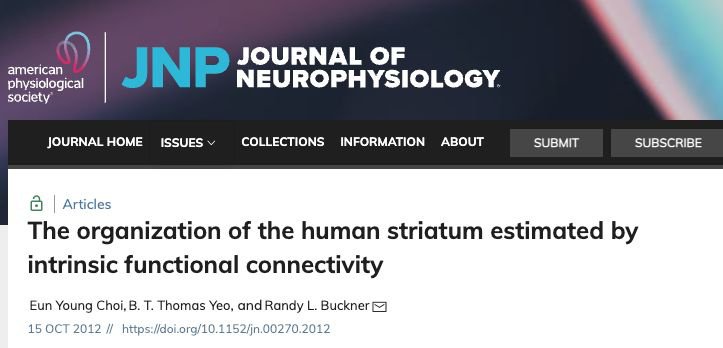
Examples of publications using GSP data
How Harvard Dataverse supports the GSP
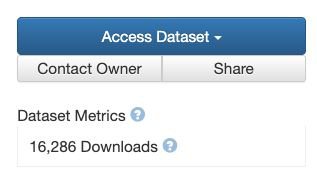
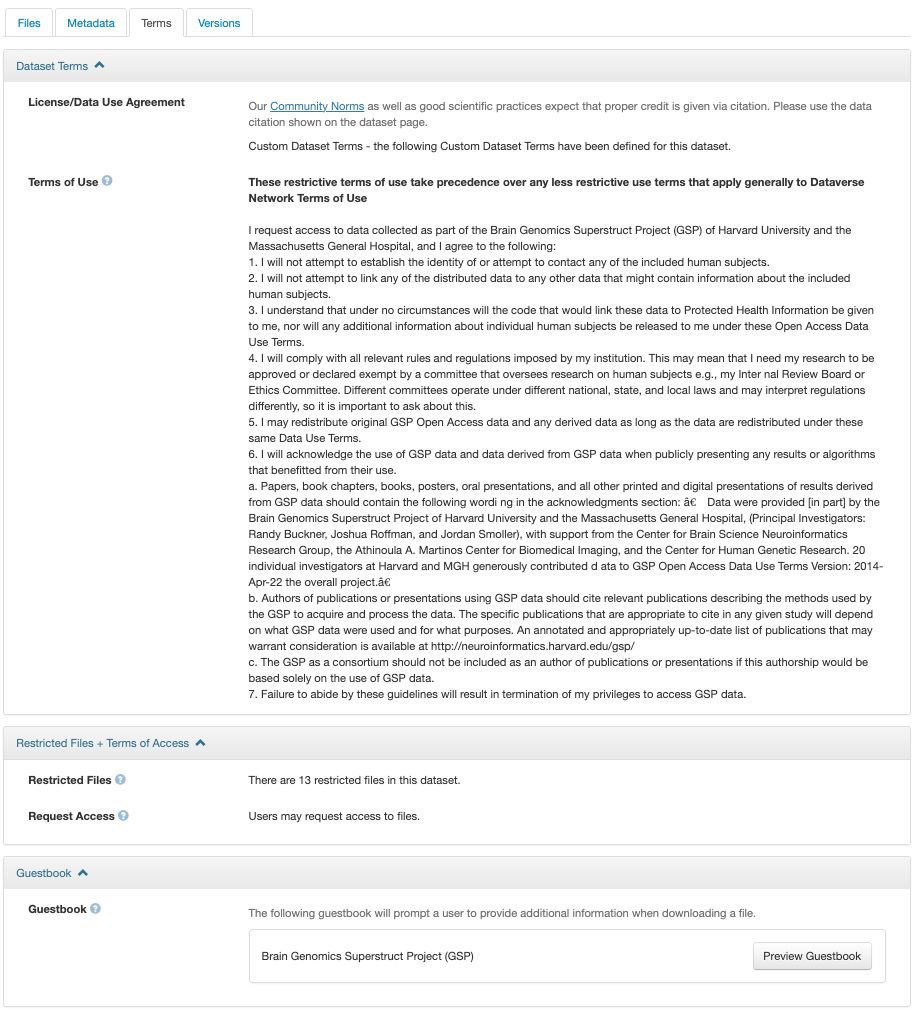
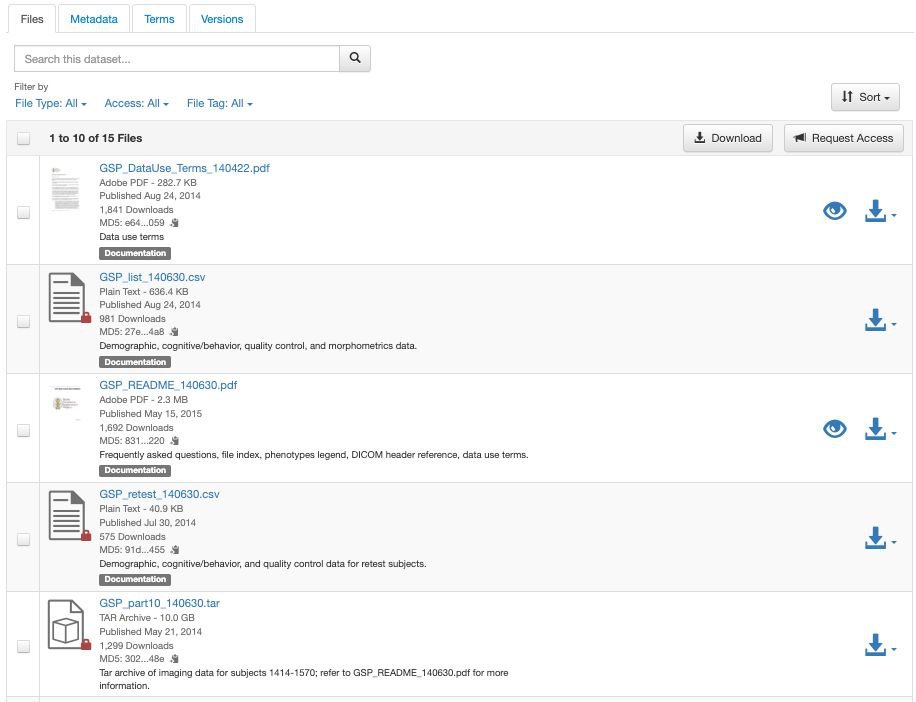
The Harvard Dataverse Repository supports this project by providing:
- a standard dataset citation and DOI, with versioning
- custom terms of use
- managed data access, and
- a guestbook feature
Dataset citation:
Buckner, Randy L.; Roffman, Joshua L.; Smoller, Jordan W., 2014, "Brain Genomics Superstruct Project (GSP)", https://doi.org/10.7910/DVN/25833, Harvard Dataverse, V10
How could your findings be used in future research in your field or another field?
Investigators who might not have access to data collection at all, and now are enabled to analyze neuroimaging, including scholars who are involved in the computational and the quantitative aspects of our field. Now they have access to data. And this includes students and fellows.
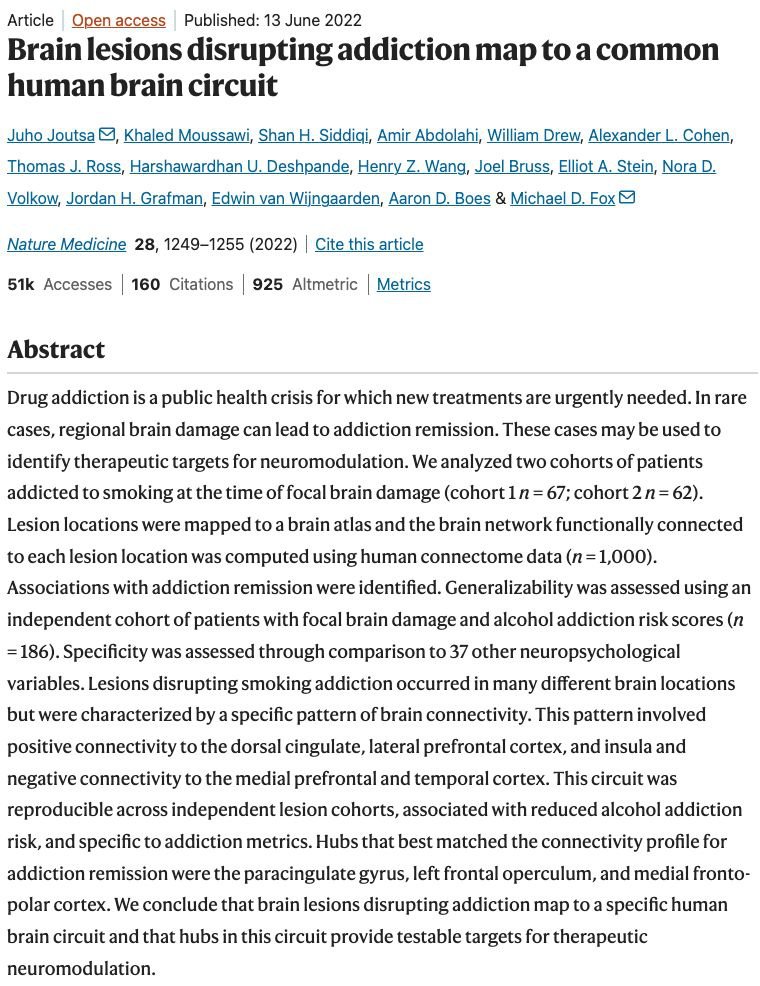
Related Datasets: We have made a fully preprocessed version of our 1,000 individual functional connectome publicly available (https://doi.org/10.7910/DVN/ILXIKS), which was created using the Brain Genomics Superstruct Project data (https://doi.org/10.7910/DVN/25833), along with all of the code and parameters used to process the data (https://doi.org/10.5281/zenodo.4905738).
How has data sharing evolved over the past decade in your research field? Do you feel there are adequate standards and resources for data management and sharing?
I think adequate standards have emerged. It has been interesting to watch the evolution of the field's norms. When we started doing this — in the nineties — we began with open data-sharing efforts but that was unusual then. We released our first open data-sharing project in 2000, so almost 25 years ago. Then we released open data-sharing tools because the field needed infrastructure to even contemplate an open sharing model. It was an insight from Marc Raichle, a mentor of mine, who prompted us to build our data-sharing tools as we were trying to get community support.
Now it's the norm; NIH has encouraged open data sharing. I think this field's standards and people's value of open data sharing encourage it. There are few barriers now — open data sharing is common in our field, but it wasn't back then. One of the insights into the evolution of that was that people didn't have comfort with data sharing partly because they weren't actually managing and databasing their data in their own laboratories and just weren't used to it. So when we built data-sharing tools and openly released them — we wanted to be the Napster of data sharing. We thought that everybody would locally manage the data in their labs, and these instances of databases with access to data could be aggregated in a Napster-at-the-time model of data sharing.
It's been amazing to watch the field change. When you ask about sharing standards in our field, I think most people — especially if they receive NIH funding — follow them. But more broadly, because foundations such as the Simons Foundation or efforts run by the Coalition for Aligning Science all encourage open, transparent data sharing, it has just now become the new standard. And it wasn't 30 years ago.
What advice would you give to other researchers about sharing/reusing data?
Protection of human subjects is the paramount priority, but to the degree that one can share and exchange data safely, I think it's essential we do so.
It is essential because we have a responsibility to get the most value out of the data from the participants who contribute, but also to have an open and transparent field. I think that there are many reasons to share data. One of the reasons is that groups and individuals who don't have access to data can get access — that includes people who are training, at times when just being able to play with data is the need; groups that want to look at problems that require data at scale, where they have to aggregate across multiple datasets, or they need replication datasets.
But there's another big reason, I believe, to share and be transparent: it encourages the field to be rigorous. There's nothing more incentivizing to make sure that you've dotted your i's and crossed your t's on your analyses than knowing that as you publish your results — as you tell the world what you think the data mean and what you've discovered — that other people are going to have complete access to the data, to be able to redo those analyses and say, "Well, maybe, maybe not," or to look at other datasets. So the transparency creates a norm where the field needs to be rigorous because it is open and transparent, and your discoveries will be checked. And I think that's a very good process.
Where else (if anywhere) have you shared data or found data to reuse?
We share our data directly to investigators when they ask. When the data are in repositories like this, we just point them to go grab it there. Some of these data, for example, are being shared through the LONI database. We've also released under the OASIS series of data and through NIH data repositories.
So if you're asking where do we share data: anywhere we can that properly protects the participants. We are open data sharers. Some of the larger national efforts now are creating repositories where people can share data, and I think, again, it's great that people have multiple ways to access these data. It carries a little bit of robustness, redundancy. Where do we get data from? Many places — UK Biobank, ADNI, Human Connectome Project, and directly from our colleagues.
Our world, as we move forward, is not gated by our ability to collect data locally; it's our ability to aggregate datasets that are of high value across the board from all over. And then we have scientific questions to utilize all those data resources to make discoveries, replicate them, triplicate them. The whole ecosystem is just more robust and enabled when there's open and free sharing of data.
How easy/difficult did you find using a generalist repository compared to other experiences?
I think, when it's seamless, because people just can download the data after they are able to authenticate. And again, we're as open as we can be…but we have regulatory constraints. I'm told that Dataverse has been incredibly easy to get data from because investigators are just downloading a bunch of tarballs. The process is varied across different platforms. I think these general databases are very hard to build. The data we put up here in Dataverse has basically been pretty flat — a bunch of tarballs and then descriptor files. It has been interesting to see even when sharing is a common goal just how difficult it is to implement effectively, especially as one tries to have more metadata and descriptors. It's just a hard thing to do and the community is still learning. We will get there.
How could the data repository landscape evolve to better support data sharing and reuse?
Some of the open datasets we're looking to release are more than 2.5 TB. So that would be my one ask — our data are getting bigger and bigger and bigger so having large data sharing options is important.
What motivated you to share your data/research in a generalist repository, and why did you choose this specific repository? Did you use any other repositories in combination with this generalist repository?
General support and excitement over a Harvard open data repository. So why are we sharing with multiple places? Sometimes it's the case that multiple places are affiliated with different aspects of the effort, so you want to give it to all of them — from our standpoint the more ways scholars have to access the data, the better. But there's an inefficiency if two places have costs and are both supporting the datasets. As that expands out, there's five and seven places at some point. Is this efficient, is that secure? Why is there not one centralized [location]? I think one of the challenges as an on-the-ground person in this new arena is knowing which repositories are going to be around in five years and ten years. And I think that there's an interesting kind of inefficiency.
I've actually said this with data storage locally, with research computing: when you don't have trusted archival processes where everybody knows and believes things are going to be around in ten years, you actually create a structural incentive to duplicate your data and be inefficient. You never want to delete things and you make multiple copies. You do not want to have things in one place because you just don't trust the ecosystem to be there for you in the future when you need it.
If I step back from it, I think I always have that in my mind: will Dataverse — will our data that we put up in Dataverse — be available in a decade? Are these other places going to be available?
I think about it from an academic perspective. We have the writings from thousands of years ago because they were written on stone and clay. We have writings from 600–700 years ago, or maybe even more, that were written on papyrus, and then high-quality paper. But how long will our digital records last?
As technologies have progressed from stone to paper to digital archives, the actual half-life of the medium has gone down and down. So, although you have the writings from hundreds and thousands of years ago, I do not believe what we are generating today is going to survive, because ironically, our current media are much more fragile. We need industrial and large-scale solutions that preserve the most important data for the future.
How has sharing your data impacted your research or collaborations?
Well, in many ways, I think just being an advocate of open data sharing has been reinforced, and always people worry — not so much anymore, but you still see some of these arguments, "People are going to misuse my data. They're not going to understand it, and they're going to argue with me." Well, I'm looking around at laboratories and their own laboratories' interpretations, and I'm not thinking that laboratories that collected the data are always interpreting or analyzing it properly. I've always had a strong feeling you have to trust and have faith in the community. We're always getting things wrong, we're always redoing things, we're always misunderstanding things, and that's just part of the process. You have to be willing to not worry about the downsides — meaning, give out your data to a lab that's going to misuse it, compete with you, and explain why you're wrong. The scientific community will figure that out, and correct answers will, over time, be known. And so the downsides, I think, are short term; the upsides are huge.
People do look to your data and value your lab because you're contributing to the ecosystem. The other thing, and a subtle one, is because we've been giving out our data openly since I started in the nineties — my whole career — simply because I thought it was the right thing to do, a lot of the tools the field has used and built have been built on our data as exemplars and use cases. So a very interesting feature that I hadn't appreciated is all of these generative tools that were being built all over the world always worked really well for our stuff because our datasets were part of the founding data set the tools were built around. And so that, you know, there's an unintended benefit — I can give five or six examples of that where tools were built that just utilized our examples, sometimes not exclusively, sometimes with multiple open datasets, but ours was always one of them.
And then another aspect in terms of how it's benefited our career is, you know, when you're giving out data, just by example, people are more open with you, giving you datasets. And so, for myself, the competing downsides — like somebody else will take our data and compete with us — I understand that people worry about that, but in 30 years, that has not actually in practice been a problem. But all the benefits and upsides have been huge, and so I've tremendously benefited.
Are you aware of any re-use of your data?
We haven't analyzed it. But, as you know, there's thousands now. We see the publications obviously. And then the OASIS datasets which released one of our earlier ones. I think those papers are cited thousands of times.
Examples of prior publications of GSP data with partial data description
- Yeo, B.T., Krienen, F.M., Sepulcre, J., Sabuncu, M.R., Lashkari, D., Hollinshead, M., Roffman, J.L., Smoller, J.W., Zollei, L., Polimeni, J.R., Fischl, B., Liu, H., Buckner, R.L. (2011) The organization of the human cerebral cortex estimated by intrinsic functional connectivity. Journal of Neurophysiology, 106(3): 1125–1165.
- Buckner, R.L., Krienen, F.M., Castellanos, A., Diaz, J.C., Yeo, B.T. (2011) The organization of the human cerebellum estimated by intrinsic functional connectivity. Journal of Neurophysiology, 106(5): 2322–2345. doi:10.1152/jn.00339.2011
- Choi, E.Y., Yeo, B.T.T., Buckner, R.L. (2012) The organization of the human striatum estimated by intrinsic functional connectivity. Journal of Neurophysiology, 108(8): 2242–2263. doi:10.1152/jn.00270.2012
- Van Dijk, K.R., Sabuncu, M.R., Buckner, R.L. (2012) The influence of head motion on intrinsic connectivity MRI. NeuroImage, 59(1): 431–438.
- Holmes, A.J., Lee, P.H., Hollinshead, M., Bakst, L., Roffman, J.L., Smoller, J.W., Buckner, R.L. (2012) Individual differences in amygdala-prefrontal anatomy link negative affect, impaired social functioning, and polygenic depression risk. Journal of Neuroscience, 32(50): 18087–18100. doi:10.1523/JNEUROSCI.2531-12.2012
Connect with GREI
Stay in touch with the GREI repositories — ask questions, provide feedback, get updates, learn about future events:
- Join the GREI mailing list: groups.google.com/g/contactgrei
- Read the GREI blog: medium.com/@blog-grei
- GREI GitHub Repository: github.com/NIH-GREI/grei-pm
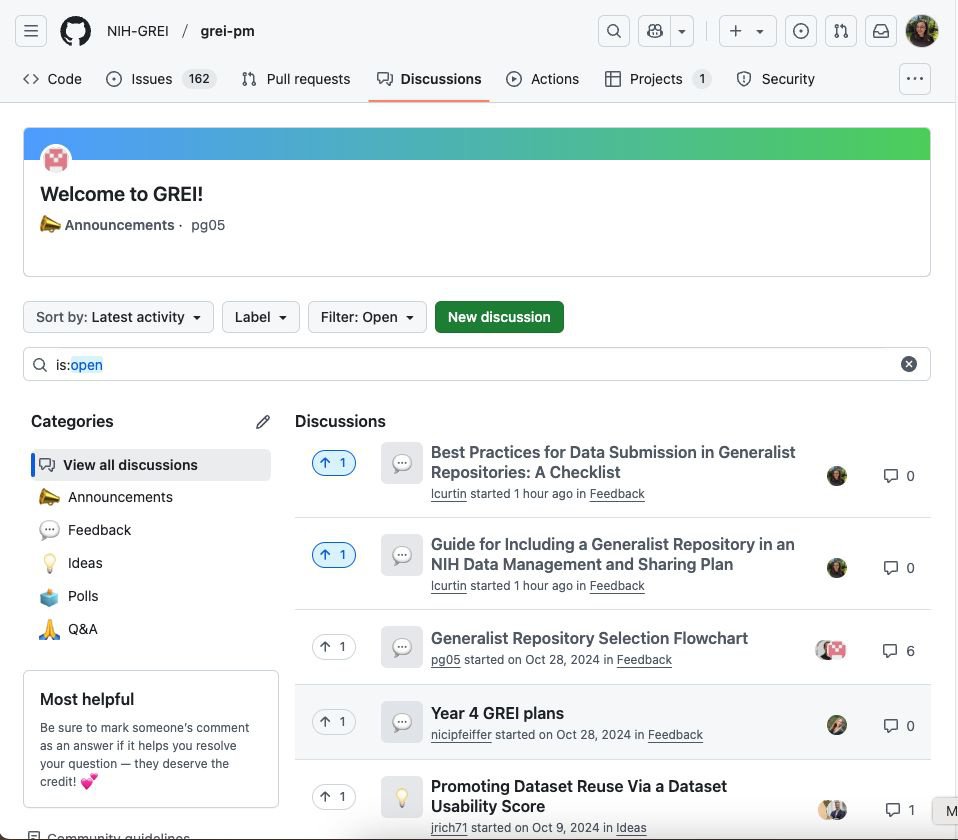
- GREI GitHub Community Discussion Board: github.com/NIH-GREI/grei-pm/discussions
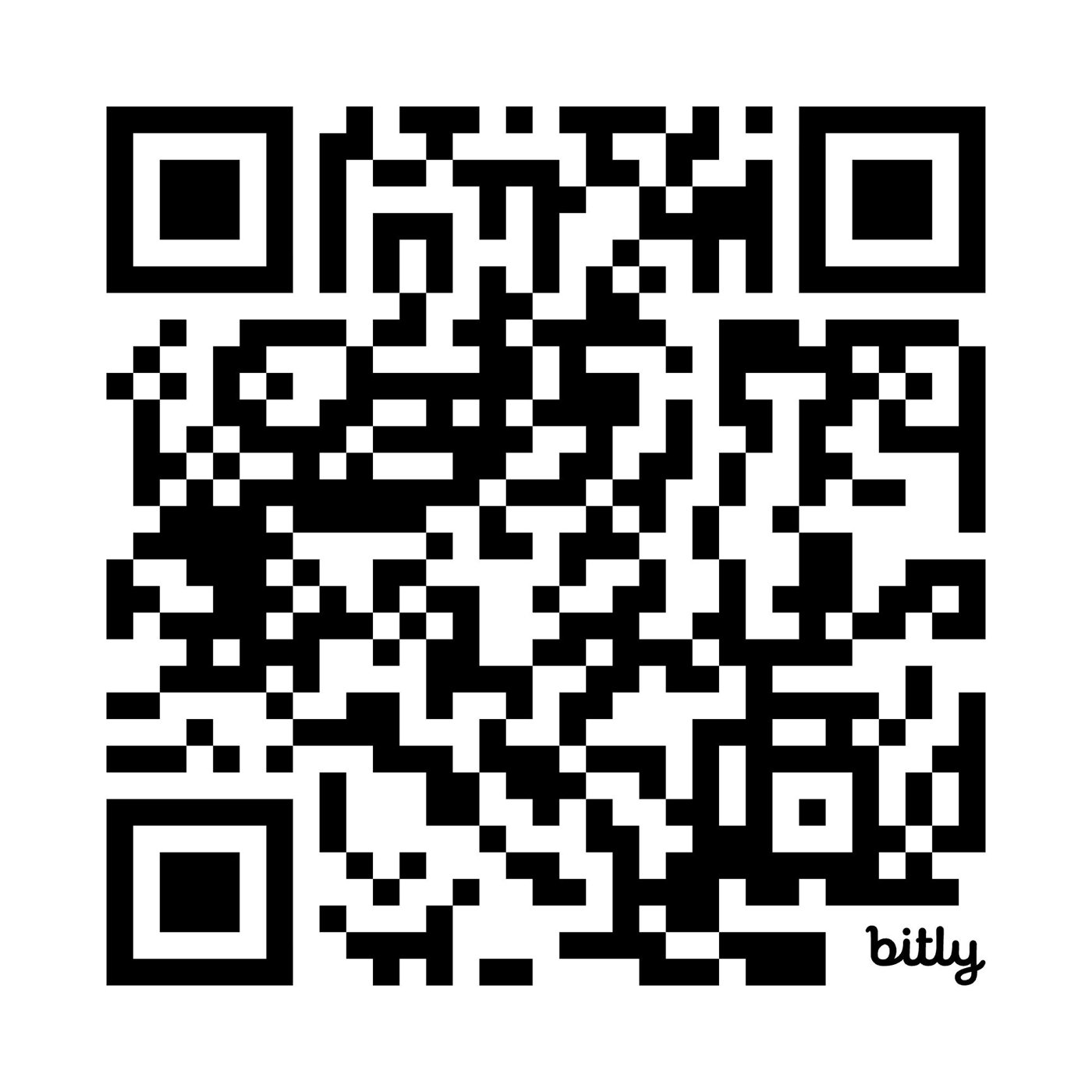
Access all published GREI resources via the GREI Zenodo Community:
2026 Webinar Series — Streamlining Data Sharing: Practical Tools and Researcher Stories from the NIH GREI
A collaboration among Dataverse, Dryad, Figshare, Mendeley Data, OSF, Vivli, and Zenodo. Register for one or all, and share with researchers at your institutions!
| Webinar | Topic | Date |
|---|---|---|
| 1 | Simplifying Repository Selection with GREI's Flowchart and Comparison Chart | Wednesday, January 28, 2026, 1pm ET |
| 2 | Improving Data Sharing with GREI's Submission Checklist | Wednesday, February 11, 2026, 1pm ET |
| 3 | Strengthening Your DMS Plans with GREI's Practical Guide | Wednesday, February 25, 2026, 1pm ET |
Register here: bit.ly/GREIWebinars2026

GREI Use Cases are supported by the National Institutes of Health (NIH) Office of Data Science Strategy / Office of the NIH Director pursuant to OTA-21-009, "Generalist Repository Ecosystem Initiative (GREI)".