Biomedical Data Sharing
Continue NIH GREI collaboration on data sharing and discovery, and NIH CAFE work on biomedical metadata, geospatial support, and data curation.
 Explore the Dataverse
Priorities and ongoing work for July 2026–June 2027.
Six directions shape the year: making biomedical and Indigenous data easier to share responsibly, finishing the modern interface, using AI to improve metadata without giving up curation, running repository services for institutions that need them, and keeping the community and Harvard Dataverse healthy. The release timeline and technical milestones follow.
Continue NIH GREI collaboration on data sharing and discovery, and NIH CAFE work on biomedical metadata, geospatial support, and data curation.
Develop technical infrastructure, governance, and policies to support Indigenous data in Dataverse installations, including Harvard Dataverse.
Advance the modern Dataverse interface toward feature completeness, improve Dataverse Collections, and address curation and user-support pain points at Harvard Dataverse.
Work with DataCite on AI-assisted curation, extract variable-level metadata, and develop responsible AI practices. Continue Google Data Commons collaboration and Croissant support, and complete remaining Google Trusted Data work.
Support large datasets, data acquisition, and paid curation at Harvard Dataverse. Help the MORU Tropical Health Network deploy and operate its own repository, including metadata customization, migration, and staff training.
Continue outreach, webinars, and the Dataverse Community Meeting. Improve Harvard Dataverse performance, including shared software improvements that can benefit other installations.
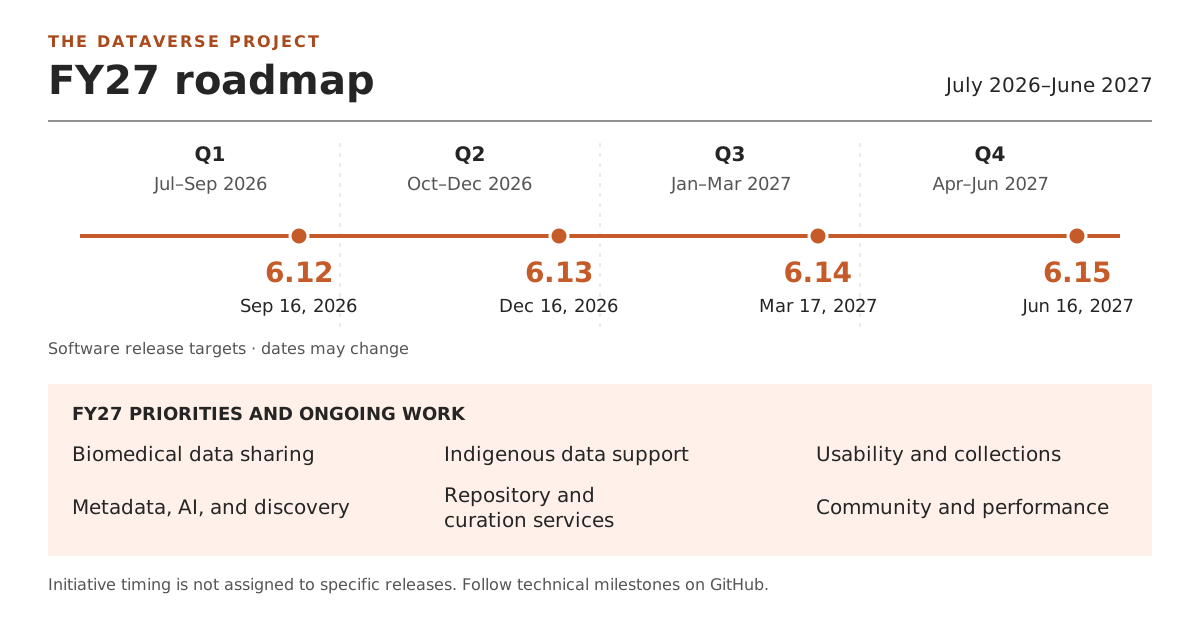
Explore planned features, fixes, and progress for each release.
Source: Dataverse release milestones. For published releases and upgrade instructions, see release notes.